采样 / 采样参数Sampling
Sampling
模型在多个候选词里怎么挑,决定输出的发散程度。How the model picks among candidate tokens — this determines how far the output diverges.
一组控制生成过程的参数统称:温度、Top-p、Top-k 等。
它们只影响「怎么挑词」,不影响模型本身的智商。
A collective term for parameters controlling generation: temperature, Top-p, Top-k and so on.
They affect only how a token is chosen, not the intelligence of the model itself.
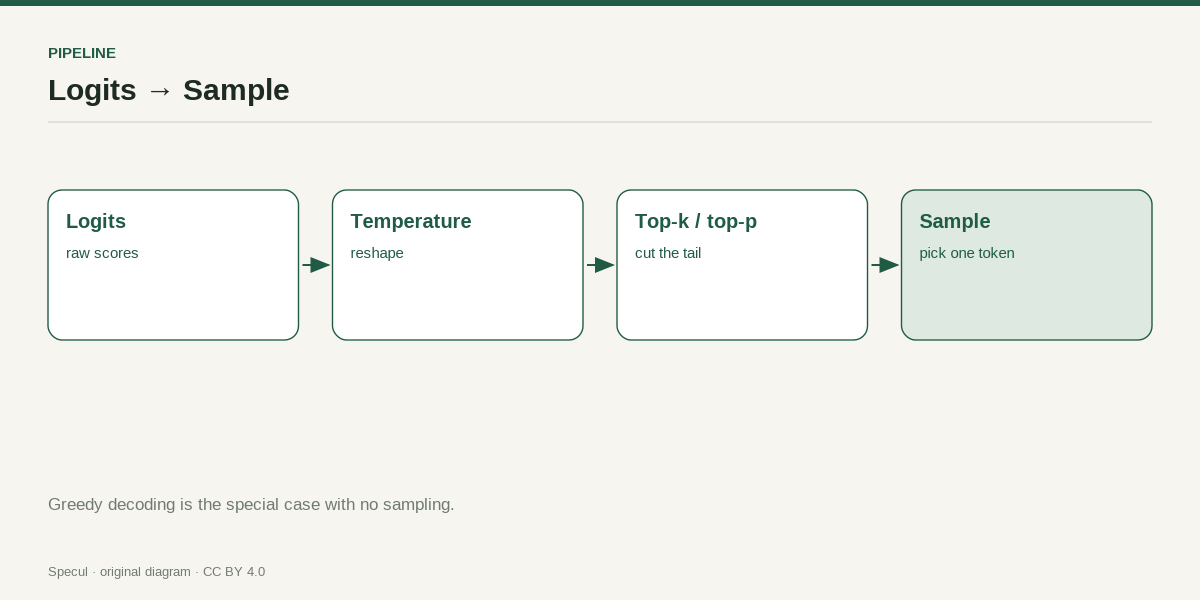
知道这组参数后,模型输出的不稳定就有了可解释的原因。而不是「它今天抽风」。Once you know these parameters, unstable output has an explainable cause instead of "it was feeling odd today".
回到名词地图看第2段的其他 43 个词 →Back to the map: the other 43 terms in stage 2 →
别停在定义:去任务手册看按什么顺序做、验收什么;或者按你手头的任务,筛 3 个工具候选。Don’t stop at the definition: use the task handbook for the order and checks, or filter three tool candidates for the job at hand.
任务手册 →Task handbooks → · 按任务筛 3 个候选 →Filter three candidates →